Showing posts with label food. Show all posts

Sunday, January 18, 2009

The Black Seeds

Here at SuperForest we love seeds…a lot. And with the Millennium Seed Bank Coalition in full swing, I thought it would be an appropriate time to drop some crazy seed knowledge while at the same time sharing a family secret. Here it goes!!!

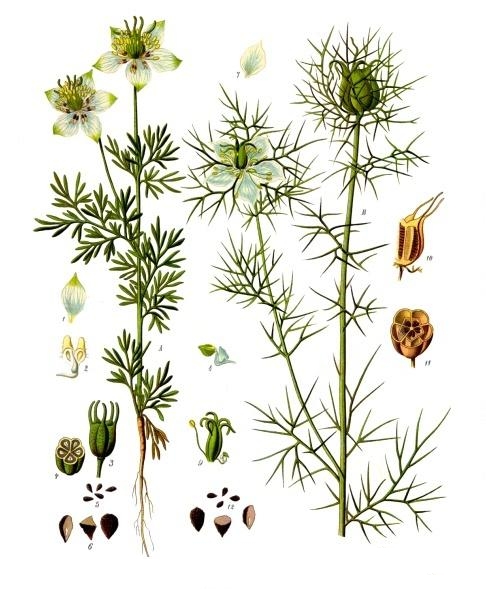
I proudly present to you, Black Caraway Seeds (or as we simply call them in my family…black seeds).


The seeds appear pretty normal but the reality behind their meager appearance is that they are actually very powerful. To commence our Black Seed Informative Tour we are going to go back in time. Here are a few facts...

1.Black seeds were discovered in Tutankhamen's tomb. This implies that it may have played an important role in ancient Egyptian practices or at the very least, was important enough for them to take with them to the afterlife.

2. Dioscoredes, a Greek physician of the 1st century, recorded that black seeds were taken to treat headaches, nasal congestion, toothache, and intestinal worms.

3. The many uses of black seed has earned for this medicinal herb the Arabic approbation habbatul barakah, meaning "the seed of blessing."

So history is trying to tell us that these little guys were important and that they can be used to treat wide variety of ailments. How amazing! Nature is so kind to provide us with such incredible gifts. A lot of scientific studies have been conducted and also validate the awesome power of the black caraway seed. Studies show that the black seeds help strengthen the immune system, inhibits histamine release, contains anti-tumor properties, fights bacteria, and works as an anti-inflammatory. Now I know what you’re thinking;this sounds too good to be true, does it work? I can only respond to this by saying I cannot remember the last time I had a cold (knock on wood).


So here comes the family secret: next time you are feeling a little under the weather, try this.

1. Go to your local market and buy a bag of these black seeds, if you know of a Mediterranean foods store try them, there is a much higher chance they carry these seeds.

2. Take a pinch of these seeds, just a pinch is all you will be eating (trust me, the seeds pack quite a punch, you won’t want to eat too much)

3. Place the seeds in your mouth and chew the seeds up really well. (This is the part where things get to get a little gross, you see, black caraway seeds are notoriously bitter. They don’t taste really good but hey, neither does medicine. You wanna get better don’t you?)

4. Swallow (probably the hardest part but trust me, it will all be worth it)

That’s it! Easy as that, take it a couple times a day and you’ll start to feel better straight away. The one thing that is important to keep in mind is that you must take the seeds right when you start to feel you’re coming down with something, if you take it when you are in the thick of symptoms, well, you might be a little too late.

And there you have it; a potential cure for the common cold. You read it here on SuperForest. In celebration, here is a lovely jam by a little band from New Zealand called…The Black Seeds (surely these lads knew the power of the black seeds when choosing their band name).


SuperForest wishes you all a very healthy 2009! Go on with your bad selves.

-C

(Here's some more info on the black caraway seed.)

Tuesday, January 13, 2009

The Importance of Brain Hydration

I had never heard of the British 1960s television series Thunderbirds and I can't even remember the last time I heard Snap's "Rhythm is a Dancer" but I have known for quite a while about how important it is to keep our brains hydrated. It was always a fact that would float around in the back of my head but after watching this drench water advertisement, it was snapped back to my consciousness.


Thanks Brains for that excellent demonstration. I can only wish to someday have dance moves that slightly resemble yours. Maybe I'll start drinking more water.

Friday, January 9, 2009

The Hudson Valley Seed Library is Online and Open for Business!


Just got word in from the ever-hip SuperForester Severine about the Hudson Valley Seed Library, an organization dedicated to preserving and selling local New York seeds.

So sayeth the H.V.S.L.:

"Heirloom Seeds With Local Roots

After four years of germinating the Seed Library concept, we are ready to blossom--from selling seeds that are grown in distant soils to cultivating a regional seed production network in New York State. In 2009, we will be offering over twenty varieties of locally grown seed, and most of our varieties will be rooted in the history and soils of New York.

Every year we plan on growing additional varieties on the Seed Library farm and contracting with organic and certified naturally grown farmers in the Hudson Valley. Within five years, we hope to be 100% New York grown.

Thank you for supporting our efforts to revive the local seed trade. With your help, we can save heirloom seeds and their stories."


Thinking about planting a Spring garden? Start with some good ol' Hudson Valley seeds!

Huge thanks to Severine for the head's up.

Thursday, December 18, 2008

SuperForester Jackson On Kauai (Updated)


Good Morning SuperForest!!


Yesterday was a very interesting day. I woke up in Manhattan amidst flurries and scurries of snow, and two plane hops later I went to sleep in the greenest, freshest paradise imaginable.

This morning I woke to the singing of birds, the hum of the Wainiha river in the distance... and that's it. No cars, no horns, no planes, just the sound of the tangelo juicer making fresh juice for all.

As her surprise Christmas present to the family, my wonderful mother worked her butt off and installed an organic garden in the yard. Plus, since we lightly quarreled about it last year, she's begun composting!

So, I've got to go and plant some seedlings and turn a compost heap over.
Such incredible abundance.

I will post more soon.

Love to each and everyone,

Jackson

(Update)

Seedlings planted, compost turned.


Thursday, December 11, 2008

WALL-E Bento Box! (With Eggy E.V.E.!)


AAAAAAAAAAAAhhhhhhhhhhhhhhhhhhhhhhh!

Made my lunch.

(via dvice)

Tuesday, December 9, 2008

How To Milk Just About Anything.


Yayyy SuperForest!

SuperForester Serra and I were having a conversation the other day and the subject of milking came up. Which was interesting because it was the second time that week for me that milking various animals had entered into the conversational stream.

In Qatar, a doctor/scientist told me that the most digestible animal milk (besides mummy's) came from the horse of all creatures.

Then Serra informed me of the wealth of critter-milking videos on youtube...

Oh ho ho! Fun, thought I.

Here we go:

Milking a cow:


Milking a horse:


Milking a sheep:


Milking a camel:


Milking a goat:


Milking an elephant:


Milking a water buffalo:


At first I was giggling like a schoolgirl as one by one I found these videos. Now I'm just sort of thirsty.

Which mammal's milk is it strangest to drink after seeing these? I'd go with all of them.
I still love me a tall frosty glass of milk. Siempre, baby.

I hope this was both amusing and informative.

Love,

Jackson

p.s. Massive thanks to SuperForester Serra and Dr. Sven Hammer for the inspiration, and to youtube for aggregating and cataloging everything we can think of filming.

Sunday, November 30, 2008

Bread, Хлеб, Pana, Brood

Here in the Netherlands it's very common to eat bread. It's so common that most people have it for breakfast and lunch. But why is bread so fascinating? It's eaten almost everywhere, the ingredients are roughly the same but still every country with a bread-culture prepares the meal differently. But what makes bread so universal? Why does the entire globe eat it? And where does the concept come from, in fact?

Let's start with the last one, the history.
The first traces of bread have been dated back to the Neolithic era, aka the New Stone Age. This is roughly 10,000 B.C., quite a while ago. Back then it was made from cereal grains and water and these are, remarkably enough, the main ingredients we still use today.
This ancient bread still has got it's descendents today, it is believed that the Mexican tortilla, the Indian naan, and the Mid-Eastern pita can be seen as "the fathers of all breads". Take the pita for example, for the people not knowing this kind of bread, it's a circular flat bun; approximately a fifth of an inch thick and about four inches in diameter.


These are a few excellent pita's. Before eating they're often toasted, sliced open and stuffed with an ingredient of choice, could be shwarma meat, could be veggies. But funny enough this type of bread got through to Italy a few centuries ago. There they decided to make it a bit larger and put a variation of toppings on it. Namely: tomatoes, mozzarella cheese and basil. Et voila, the pizza was born. Later it became an international food and migrated to the U.S.A. and other countries.

But pizza is a somewhat mutated form of bread. So the bread-trend started a couple of thousand years ago at various places and managed to spread across the entire world. But why would such a simple-seeming thing spread like a virus?
Back in the Neolithic days people had lots of land that could be used for harvesting crops. And they did, in fact crop farming was first developed in the Neolithic. People had lots of crops but they hadn't discovered breakfast cereal yet. So there was no point in flattening some of your maize, putting it in a basket and holding the whole under a cow while you're milking it. No, there was just a lot of grain but no proper way to prepare it. So everyone was very happy to get a 'DIY-guide' on processing the grain into an edible product.

Furthermore the edible end-product, bread, contains a lot of energy. Energy that was needed for hard work on the land.
Funny enough this is still the reason why we eat bread in the Netherlands. It contains lots of energy in the form of carbohydrates. This kind of energy can be released easily by your body so when consuming bread in the morning you're ready to go when you arrive at work or school. (I must admit I rarely have bread for breakfast, personally I prefer a good bowl of breakfast cereal; also containing carbs).
There are a few more reasons to eat bread today then there were back in the Stone-Age days. The fibers are good for your digestion and (added) vitamins contribute to your general health.

This directly could be one of the reasons why it's eaten at such a vast amount of places. But there's got to be another reason than: "it's healthy."
And there is. For starters grain is available at a lot of places. And where there's grain, there's bread; so to speak. But personally I think that the fact that it's customizable plays a larger role. Translated in 21st century slang: "Bread is hackable". If you have a bit of dough you can do an infinite number of things with it. You can put nuts, fruits, spices, seeds or even vegetables in it to improve the taste. When done baking there is, again, an infinity of serving possibilities. In Mediterranean countries for example they serve bread right before dinner with olive oil and salt. The purpose is to pour some of the oil over a slice of bread and sprinkle a bit of the salt over it. In France, also a Mediterranean country, but a bit different though, they serve their famous Baguette with their even more famous cheese (or fromage, if you're a Francophone).
And here in the Netherlands, well, we bake a bread, slice it up and cover it with a variety of things. I often have strawberry jam on my slices at lunch but the Dutch in general massively consume hagelslag. Don't blame yourself if you've never heard of this before, it's a Dutch bread topping made from chocolate.


They're a bit like the U.S. Jimmies. Anyway, they're widely known and used within the borders of the Netherlands. When people go camping in another country they take a few cartons of hagelslag with them because it's unavailable in other countries. That's a fun fact about Dutchmen actually.

Since SuperForest is quite international it seems an interesting idea to ask the readers if they eat bread. So, do you eat bread? And, if yes, what kind of bread? When do you eat it and how do you eat it? Drop us a line.

-jdh

Monday, November 24, 2008

The Proper Way to Eat a Pomegranate


It’s pomegranate season yo!


And I’m going to teach you the proper way to eat this delectable goodie nature has provided us. Okay so maybe it’s not the proper way…actually it isn’t very proper at all but it is definitely the most fun!


Step 1: Choosing the pomegranate. Most pomegranates at around this time of year are delicious so choosing good ones is not much of an issue however, for the purpose of this exercise; you want to look for a few characteristics. Here are pomegranates A, B, and C.


Pomegranate A is beautiful no doubt about it however the smooth and shiny outer surface tells us that the skin on this one is a little too thick. Pomegranate B has much thinner skin and normally, although it is uglier, it would be perfectly good to eat but again, for the purposes of this exercise we want to avoid these sorts of pomegranates specifically because of its scars and the fact that those mean it could easily burst open. Lastly we have Pomegranate C, these are the sorts of pomegranates perfect for this method of consumption. Its bumpy outer shape shows us that the skin has thinned and that its lovely grains on the inside are full of juice. It is also smooth and scar free. Once you have chosen your pomegranate you are ready to move on to the next step.


Step 2: Wash the pomegranate, for obvious reasons.


Step 3: Give it a good squeeze. By squeezing the pomegranate you are releasing all of the juices in the inside (we avoided the pomegranates with scars before because if it were to burst during this step, things could get ugly). Do this until the pomegranate is relatively soft.


Step 4: Take a small bite. This should be just enough to pierce through the skin and create a small hole. Spit out the skin you’re not supposed to eat it.


Step 5: Drink the juice and enjoy. Place your lips over the incision and suck as if your life depended on it while squeezing the juice. Be careful not to spill any of it, pomegranate stains can be quite nasty and quite permanent.


How much more organic can a drink get? Recent studies have shown that pomegranate juice also offers several health benefits. So there you have it, delicious and super healthy for you as well.

Monday, November 10, 2008

Ask SuperForest: Christine's Question!


Good Morning SuperForest!

We've just received a question from SuperForester Christine:

"Dear SuperForest,

Hello! How are you? I love your blog!

So, I've got a bit of a dilemma and hope you can help. I'm a busy working single mom who is in need of streamlining my dining. I'm a dutiful recycler and re-user, but am finding that I'd like to eliminate the need for that by simply using smarter products. So, I'm in search of something that can allow me to store food in batches that can be easily reheated. Here's wherein my challenge lies because I'd like in this food container:

1) no plastic, I'm tired of so much of it around

2) lightweight, for on the go

3) varied sizes, for different yummy things

4) freezer-capable, to use later

5) oven-capable, I don't own a microwave

I reuse my plastic take-out containers, but then have to scoop that food into oven-ready dishes, then serve onto our dish ware, and that's just a lot of dishes and wasted energy! My poor hands! Anyway, my desire is to be able to cook and prepare nice healthy foods for myself and my daughter, which I can then store (be it a couple days or weeks), pop in the oven, serve or sometimes eat from, then wash and repeat!

Hope you can help!

Your biggest fan,

Christine Norrie
New York, New York


PS. Is it also too much to ask that it be designed nicely as well?"


Christine!

Thank you for your question. I'm sure that by now a lot of folks have heard about the potential for plastic packaging to introduce some interesting chemicals into ones body, and are wondering about the safety of their food storage containers.

We think we have an elegant, long lasting, and beautifully designed solution:


Sanctus Mundo
is a Korean company that makes a wide variety of glass and stainless steel food containers. Yes, they are manufactured and shipped from Korea, but once here, they will last a long time and mitigate the use of many plastic containers.

Here's the pdf of the entire line.

Sanctus Mundo's products are imported by lifewithoutplastic.com and are available through their website.

U haz questionz? We haz anserz! Ask SuperForest

Tuesday, October 21, 2008

Oprah on Proposition 2


"The average American consumes 254 eggs every year--that adds up to about 76 billion eggs produced in this country every year." 


Good Morning,

There is a law that is being voted on in California next month called Proposition 2. This law would require that all the cages for egg laying hens, pregnant pigs and veal calves be increased, allowing the animals to have more room to lie down, turn around, stand up and spread their limbs out without touching the sides of the cage or another animal. 

It's hard to believe, but there is a lot of opposition to this law, especially by farmers who worry what this will do to their business, if it goes into effect. 

Oprah has an incredible amount of reach and this is an important issue impacting the sustainability of our food and our farming techniques. I was really excited when I heard she had a show on this topic. 

If this is of interest to you, read this Oprah article. It is always important to be reminded of where our food is coming from and it is a very clear and thorough article. 

If you don't have the time, here are some of the highlights:

"Those who support Proposition 2 say these animals have the right to more space during their lives. Opponents of Proposition 2, including farmers and industry representatives, say the new law would drive up costs, put farmers out of business and end the egg industry in California, and deny consumers the right to choose less-expensive food"

"...I do think that we can, with some modest choices—and Proposition 2 is one example of that—have a great impact on the quality of life on farms all over the country and help preserve the family farm while we're at it."

"This is just about basic decency," he says. "It's about, if animals are going to be raised for food—and that's certainly the case in this country—then the least we can do for them is allow them to move. I mean, what's more basic than allowing animals with legs and wings to move around?"

"Ryan Armstrong, a third-generation egg farmer from California, is strongly opposed to Proposition 2. He says that if Proposition 2 passes, it will make eggs produced in California too expensive for most consumers, creating the possibility that eggs will be imported from places without these animal housing laws."

"Julie Buckner represents Californians for Safe Food, a group that opposes Proposition 2. "Certainly the egg industry in California will be wiped out," she says. "And in all likelihood, eggs will come from outside the U.S.—Mexico, even overseas as far as China."

"Jude says he would never keep his sows in gestation crates. He prefers to see them root around in a grassy field. "Something about it just makes me feel good. The positive energy from the animals translates to me," he says. "I think it translates into the food as well. Food is about energy."

"By 2012, Wayne says gestation crates will be banned throughout the European union. "This is not pie in the sky. We're the nation that put a man on the moon nearly 40 years ago," he says. "Can't we allow animals to move? That's the basic question."

"Amy says their natural approach—without antibiotics or growth hormones—actually costs less than alternative methods. "While no farming is cheap by any means … we don't have the buildings it takes to house that many calves," she says. "So we don't have to upkeep those buildings or build any of those structures on our farm."


What I found amazing was to see the large corporations that have signed on in support of these more humane ways of raising animals.

"Small family farms aren't the only ones jumping on the cage-free, free-range bandwagon. Lisa says many corporations are adopting a similar philosophy. In 2000, Chipotle Mexican Grill, a fast-food chain, began using cage-free pork in their burritos and tacos. This year, all 8 million pounds of pork they'll use will come from cage-free pigs.

In 2005, Whole Foods Market began exclusively selling eggs from cage-free hens. Then, Ben & Jerry's followed suit and became the first major food manufacturer to commit to using only cage-free eggs in their ice cream. Burger King, the world's second largest burger chain, has also announced that 5 percent of its eggs and 10 percent of its pork now comes from animals not confined to crates or cages."

Oprah finished with this:

"California voters, Proposition 2 will be on your ballot next month," she says. "The rest of us can vote at the grocery store with the food we buy for our tables."

Nice Job, Oprah!

Niki 

Monday, October 13, 2008

Worms! Can ya dig?

Hey everyone!

Say you wanted to compost your organic waste for a while, but you live in an apartment, or don't have enough room for a traditional compost in your backyard. Well, with worm composting, now you can! The Can-O-Worms lets you have your very own composter right in your kitchen.


Please allow me to introduce to you some of my friends:


These little guys are the world's best recyclers. Vermicomposting, simply put, is the process of composting using earthworms. It is very similar to regular composting, but with a few differences. Let's take a minute to learn about these crazy crawlers, courtesy of Abundant Earth:

They can live for a long time (15 years or more!)
They have both male and female reproductive organs
They can be bred easily at home or school
They produce castings which have a neutral pH (around 7)
Their castings increase crop and pasture yields
They increase the level of essential microbial activity in the soil
They can consume their own body weight in food every day
They double in population every 2-3 months, in ideal conditions
Imagine eating your own body weight in food every day! Worms will eat just about any organic material (except meat), even the useless junk mail you receive. Not so useless anymore, eh? And the castings that your worms leave behind work as a great natural fertilizer!

The Can-O-Worms retails for around 120 bones. If you would like a cheaper, DIY alternative, try making your own!

Love,

Spoony

Friday, October 3, 2008

Johnny Rotten's Butter Ad


Johnny Rotten, punk rock icon and former front man of the Sex Pistols has a new commercial out. For butter.

Here it is:


Wild. Saw it boingboing.

Guinness - NoitulovE = (World's Best Ad?)


How have we never heard of this incredible ad?


Amazing ad! Read the wiki.

Wednesday, October 1, 2008

Casson Trenor - Sustainable Sushi!


Mmmmmm, sushi. We absolutely adore it. That said, we try not to eat it all the time because we're well aware of the trouble that our planets fishing stocks are facing.

So it was nice to get and email from SuperForester Dylan telling us about a new book coming out that will serve as a handy guide for how sustainable your sushi choices are.

Check it out:
"Written by fishery expert Casson Trenor, the pocket-size guide profiles the most common types of fish and shellfish that one might encounter at a sushi bar, offering information on where and how they are caught, whether or not they are safe for us, and how they are related to the current fishery crisis.

The guide takes into account all of the critical factors, from mercury levels to unregulated fishing practices, and offers a color-coded system that helps you choose sustainable and healthy options. This issue is just now gaining momentum on websites and blogs, following a recent article in Gourmet magazine."

Sustainable Sushi takes a lot of factors into account, and presents them in a clear, easily referenced guide. Couple that with beautiful illustrations of the fish being categorized and you've got an attractive and handy resource.

Here's a great quote from the afterword:


"In our world of growing populations and shrinking resources, changing the dining habits of a few individuals isn’t going to end starvation or bring about world peace. Sustainable Sushi isn’t trying to fool anyone into believing that. Rather, the point
of this book is to help you start thinking about sustainability in all aspects of life.

That being said, don’t underestimate the importance of your choices at the sushi bar. When we start asking questions and eschewing options like bluefin tuna in favor of more sustainable choices, we send a message that we care about the impact of the food we eat. Our actions demonstrate that we think about how our food is raised or captured, and our concern proves that the values behind our food are more important than its flavor.

Those individuals willing to think this way, to pass on a delicacy or forgo an old favorite because they believe in a sustainable lifestyle; they are the future of this planet."


Sustainability, sushi-related or otherwise, is a very tasty thing.

Casson Trenor

Good on you, Mr. Casson Trenor. Congratulations and thanks to you and North Atlantic Books for bringing this book out at such a crucial time.

Sustainable Sushi comes out in January of '09.


Love to fish and humans everywhere.

-Team SuperForest

Tuesday, September 30, 2008

SuperForester Cassie Presents: Bento Box Ring and Cute Cookery!


This just came in from the incandescent, unstoppable SuperForester Cass, (she of the mighty Gravel and Gold blog!) Absorb!

"Hiya Jack!

SuperForest is looking super great! I love your alphabet for peace drawings.
Also, I for one would buy the T-shirt for sure. And I would really, really buy the hoodie.

We had fantastic travels and it was good to take a break from it all, but so good to come home.
And now that we're home, we can get down to the vital business of eating lots of sushi. It seems that no matter where I travel--even to France, the very heart of gourmand rapture--all I crave, seek, downright require is Japanese food. Which got me to thinking....Surely your devoted SuperForesters would agree that nothing covers the Japanese/lunchtime sustainability bases like a hearty bento box. So then, a this-and-that celebration of the ultimate this-and-that apparatus, the mighty bento box:


For a truly tiny bit of this-and-that on the go, it's wise to pack an itty-bitty snack in your essential bento box ring, from the excellent CRAFT blog.

For an awesome kick in the the creativity pants, be inspired by the daily outpouring of one mother's love, creativity, and bento artistry to be found on e-bento. Edible froggies, and octopi, and samurai, Oh my!

To join the whole universe of daily bento blogging, check in with one of the many suggested at cookingcute.com!


If it's the bento accoutrements, (say a hand carved and lacquered Japanese elm bento box,) rather than the contents therein that really get you a-drooling, justbento.com has what you're after.

Might there be something for SuperForest here?

Hope you are very well indeed.
Love!
Cass!"

-Cass,

Indeed there is! Thank you so much for the post!
Love,

Jackson

Thursday, September 25, 2008

What's in Season NY?

Hey Everyone!

TimeOutNY, this week, has a great chart to show us what is locally in season from October through December! Which green market has the best brussels sprouts? Which farm sells the yummiest pears? They have the answers:


This is sooooo useful!

Here is a link to their site, so you can print it out and put it on your fridge (if that is the most effective way for you) or you can just keep it on your desktop, when your wondering what to make for dinner!

If you have one for your local area, feel free to email me and I'd be glad to post it!

Yummy Yummy!

Niki

Sunday, September 21, 2008

Aquaculture!

Of course the first thing that pops into your mind where you hear the word aquaculture is your favorite underwater 80's cartoon:


The second thing you think of is fish farming. Aquaculture is the broad term for any type of fish production (breeding, rearing, and harvesting) in any water environment in the world. You more commonly understand it as the difference between "farm-raised" and "wild-caught", at your local Whole Foods store. As the NOAA (national ocean and atmospheric administration) website states: "Aquaculture is the fastest growing form of food production in the world," and "Globally nearly half the fish consumed by humans is produced by fish farms"

That's big business and it's getting bigger as the world's wild ocean fisheries rapidly diminish. We at SuperForest love our seafood, which is why we also love aquaculture farms like this:


Sustainable Open Ocean fish cages like the one above, simulate and replenish actual wild fish populations. They are healthy, humane, and what is more, pull double duty as man-made reefs -- overtime transforming into their own self-contained ecosystems; promoting growth and attracting marine life big and small. I know because I saw it firsthand, freediving off the cage pictured above, in Hawaii.

Hopefully this type of pro-environment aquaculture already underway in Hawaii can serve as a model for similiar types of sustainable fish-farming worldwide. My marine biologist and NOAA friends are excited about it. And SuperForest is too.

Mmm...sushi!

-Always Merry and Bright!
Jordan